
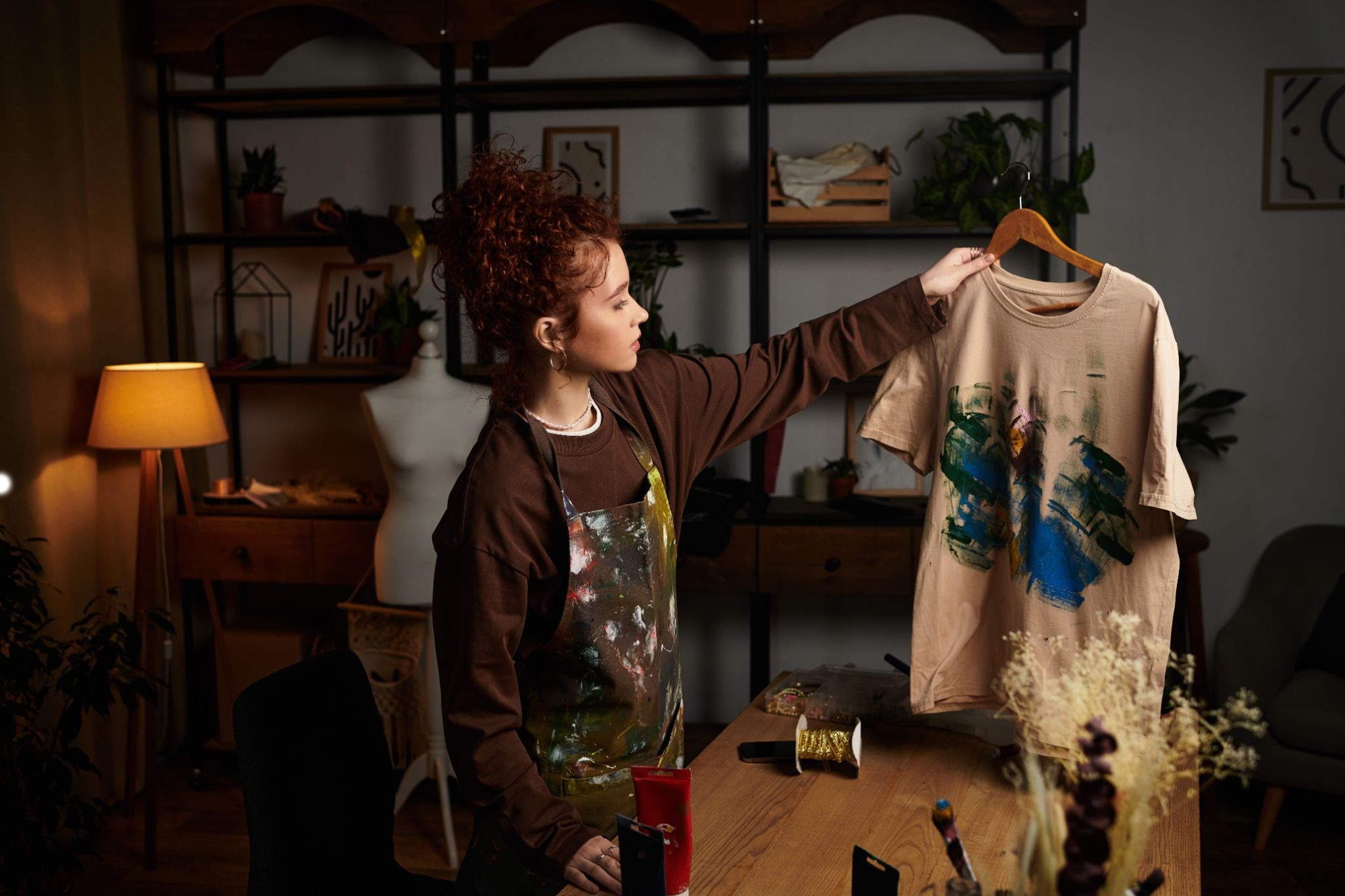
There is a particular feeling that comes with wearing a piece of artist merch in public and seeing a stranger recognize it. A split second of mutual recognition. A small nod. Sometimes a full conversation that would never have happened otherwise. In that moment, a T-shirt stops being a T-shirt and becomes something else entirely. A signal. A handshake. A declaration of something you both belong to.
This is the quiet power behind artist merch popularity, and it is why what began as a simple revenue stream for touring musicians has grown into a multi-billion-dollar cultural industry that shapes fashion, drives social media, and tells us something profound about how people form identity and community in the modern world.
What Artist Merch Actually Is and How It Has Evolved
Artist merch, short for merchandise, refers to any branded product created and sold in association with a musical artist, band, or performer. At its most basic level it encompasses T-shirts, hoodies, hats, and posters bearing an artist’s name, logo, album artwork, or imagery. But the definition has expanded dramatically over the past decade to include almost any category of consumer product imaginable.
Today, artist merch includes limited-edition vinyl records and cassette tapes, fine art prints, enamel pins, tote bags, phone cases, candles, jewelry, ceramics, skate decks, sneaker collaborations with major footwear brands, perfumes, beauty products, and even food and beverage lines. Artists like Beyoncé, Travis Scott, Billie Eilish, Harry Styles, and Bad Bunny have extended their merchandise universes into territories that would have been unrecognizable as merch a generation ago. The category has become as broad and creative as the artists themselves.
The real transformation, however, came with the digital revolution and the collapse of traditional music industry revenue models in the 2000s and 2010s. As recorded music sales declined and streaming platforms paid fractional royalties, merch became not just a supplementary income stream but a primary one for many artists. This economic shift drove enormous investment in the design, quality, and creative ambition of artist merchandise, and that investment changed what merch is and what it means culturally.
The Streetwear Crossover That Changed Everything
One of the most significant developments in artist merch popularity has been its crossover into streetwear and high fashion. This blurring of boundaries between fan merchandise and fashion began gaining serious momentum around 2013 and 2014, when Kanye West’s Yeezus tour merchandise, designed with creative director Wes Lang and featuring Gothic imagery and high-quality garment construction, sold out immediately and began circulating in the secondary market at prices that had never been associated with concert tees before.
Why People Buy Artist Merch: The Psychology Behind the Purchase
The obvious answer to why people buy artist merch is that they like the artist. But this is only the surface of a more complex set of motivations that behavioral psychologists, cultural studies scholars, and consumer researchers have spent considerable effort understanding. The popularity of artist merch is driven by psychological forces that operate at the individual level and at the level of social identity and group belonging.
Identity Expression and the Statement You Make Without Words
Human beings use clothing and objects as tools of identity communication constantly and largely unconsciously. What you wear signals who you are, what you value, what you belong to, and who you want to be perceived as. In a world that offers almost infinite identity options and that increasingly values authenticity and personal expression over conformity, artist merch provides a particularly potent form of identity material.
Wearing a piece of artist merch is an immediate, visible declaration of affiliation. It says something specific about your taste, your values, your emotional connections, and your membership in a cultural tribe. The statement is more personal than wearing a generic brand logo and more culturally specific than almost any other fashion choice. It places you within a community of people who share not just a musical preference but often a whole constellation of values, aesthetics, and cultural reference points associated with that artist.
This identity function is why the design quality of merch matters so much to buyers. A poorly designed, cheap-feeling piece of merch does not provide the same identity value as something that looks and feels genuinely good. If wearing an artist’s merch is partly about presenting a version of yourself in public, then the quality of the item directly affects whether it serves that function successfully. This is why artists who invest in thoughtful design and quality production consistently see stronger sales and greater cultural longevity in their merchandise than those who treat it as an afterthought.
The Emotional Connection That Turns a Product Into a Relic
There is another dimension to artist merch purchasing that goes beyond identity expression, and it operates at a more purely emotional level. For many fans, a piece of artist merch is a tangible representation of an emotional relationship with music that is fundamentally intangible. Music exists in time. It disappears the moment it is played. The emotions it creates, the memories it anchors, the comfort it provides, are real but evanescent. A piece of merch makes something of all of that permanent and physical.
The Economics of Artist Merch Popularity
The cultural significance of artist merch is inseparable from its economics. Understanding the financial dimensions of the merch industry explains why it has received so much investment and attention from artists, managers, labels, and brands, and why the quality and creativity of merchandise has increased so dramatically over the past decade.
How Much Artist Merch Is Worth
The global artist merchandise market is substantial and growing. Industry estimates value the licensed music merchandise market at over four billion dollars annually in the United States alone, with global figures significantly higher. For major touring artists, merchandise sales at concerts can represent a significant portion of total tour revenue. Industry sources commonly cite figures of between 10 and 25 percent of total gross revenue from major tours attributable to merchandise sales, with some blockbuster tours performing significantly better.
For artists who have developed their merchandise into a genuine fashion and lifestyle brand, the economics are even more dramatic. Travis Scott’s Cactus Jack brand, which operates as both a music-adjacent lifestyle brand and an artist merchandise operation, has generated revenue figures estimated in the tens of millions of dollars annually. Beyoncé’s Ivy Park athleisure line, while formally a brand partnership rather than traditional artist merch, demonstrates the economic scale achievable when artist merch ambitions extend fully into the apparel industry. The economic potential of artist merch, particularly for artists with dedicated global fanbases, is now recognized as comparable to or exceeding the potential of recorded music revenue.
The Limited Drop Model and the Economics of Scarcity
One of the most significant developments in artist merch economics over the past decade has been the adoption of the limited drop model borrowed from streetwear culture. Rather than making merchandise available continuously, artists and their teams release carefully curated collections in limited quantities at announced times, creating artificial scarcity that drives demand, urgency, and secondary market activity.
This model transforms the economics of merch sales in several important ways. Scarcity increases perceived value, allowing artists to price merchandise significantly higher than equivalent commodity apparel while maintaining strong demand. The drop event itself becomes a cultural moment that generates social media activity, press coverage, and fan engagement far exceeding what a standard merchandise page can produce. And the secondary market activity generated by sold-out drops, with fans reselling items on platforms like StockX, Grailed, and eBay, extends the cultural conversation around the artist and the merchandise for weeks or months after the original sale.
Social Media and Its Role in Amplifying Artist Merch Popularity
It is impossible to discuss the current scale of artist merch popularity without accounting for the role of social media in amplifying it. Social media platforms, particularly Instagram and TikTok, have created an environment where wearing and displaying artist merch carries social currency that was previously limited to the physical concert space.
When a fan posts a photograph wearing a newly released artist merch item and the post receives engagement from other fans, the merch becomes part of a social exchange that extends far beyond a simple consumer transaction. The item is simultaneously a fashion statement, a community signal, a piece of content, and a way of participating in a larger fan conversation. Artists with highly engaged social media fanbases benefit from this dynamic enormously, because their most dedicated fans effectively become unpaid ambassadors for new merchandise releases, creating organic reach that no paid advertising budget can fully replicate.
Influencer Culture and the Merch Ecosystem
The relationship between artist merch and influencer culture adds another layer to the social media dynamic. When prominent fans, fan accounts, fashion influencers, or celebrity fans are seen wearing an artist’s merch, the aspirational effect on their own followers can drive merchandise sales as effectively as direct promotion from the artist. This creates a distributed promotion ecosystem around popular merch releases that is largely organic, credibility-driven, and highly effective at reaching audiences who might be skeptical of traditional advertising.
The Sustainability Question in Artist Merch
As artist merch popularity has grown, so has scrutiny of its environmental and ethical dimensions. The apparel industry is one of the most resource-intensive and polluting industries on Earth, and the fast fashion dynamics that influence some segment of the merch market, rapid turnover, trend-driven production, cheap materials, carry real environmental costs that some artists and fans are beginning to take seriously.
A growing number of artists have begun to address this directly in their merchandise programs, choosing organic and recycled materials, partnering with manufacturers with certified ethical supply chains, and designing merchandise intended for longevity rather than trend-cycle turnover. Billie Eilish, whose commitment to environmental advocacy is central to her public identity, has been particularly consistent in ensuring her merchandise meets meaningful sustainability standards, and has used her merch program to communicate environmental values to her fanbase alongside her music.
Final Thoughts
Artist merch popularity is not a trend in the conventional sense. It is not going to peak and fade like a fashion moment. It is the expression of something more durable and more fundamental: the human need to make tangible what is otherwise invisible, to wear your loves on the outside, to find and signal your people in a crowded world. The T-shirt with a band name on it has always done this. What has changed is the scale, the sophistication, the economic stakes, and the cultural ambition of what artist merch has become. It is now a domain where creativity, commerce, community, and identity intersect in ways that matter to millions of people and generate billions of dollars. It is where fashion meets fandom, where art meets commerce, where the most private emotional experiences of listening to music that matters to you find a public, physical form. The next time you see someone wearing an artist’s merch, remember that what you are looking at is not just clothing. It is a piece of someone’s inner life made visible. And that is why it will never go out of style.